
5-Inch vs 6-Inch Gutters: What Works Best for West Virginia Rainfall
By Flag Gutter · March 10, 2026 · 2 min read
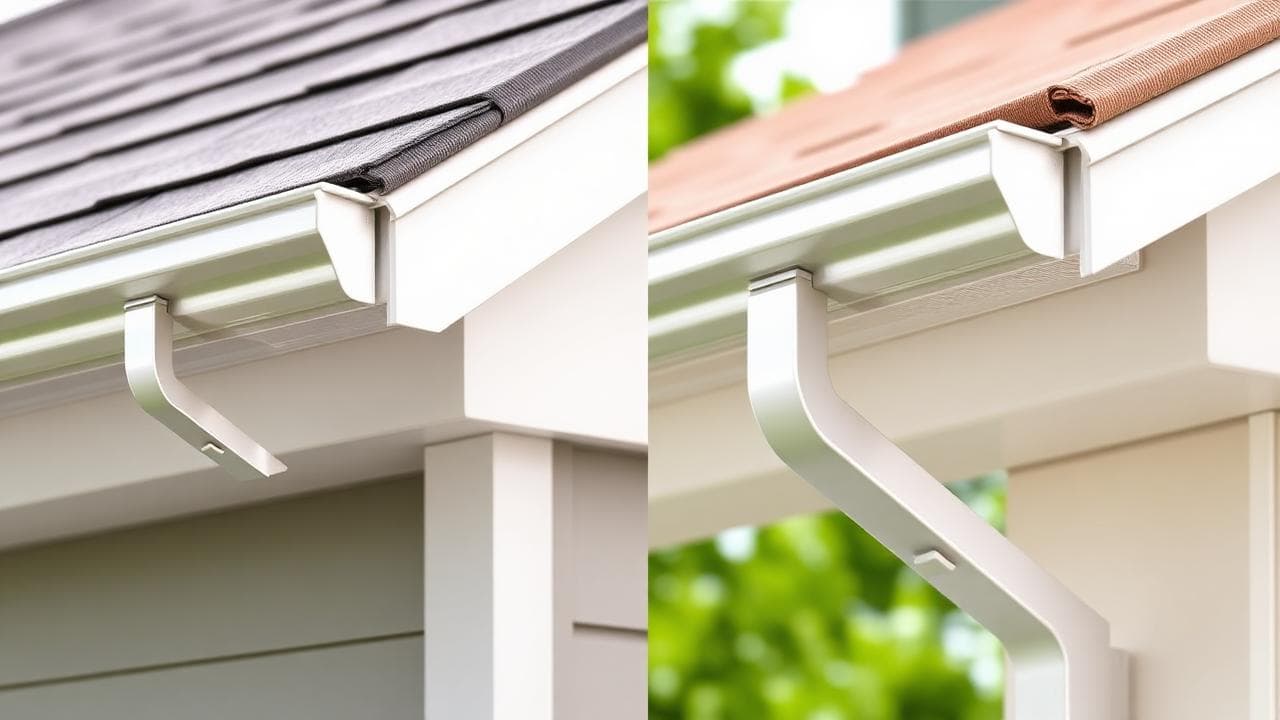
Choosing the right gutter size is not just a design decision. It affects how well your home handles heavy rain and how often your system clogs. In West Virginia, storm runoff can be intense — especially around valleys and wooded neighborhoods — which is why so many homeowners ask whether 6-inch gutters are worth it.
Here is a clear breakdown to help you decide.
The main difference between 5-inch and 6-inch gutters
The difference is capacity. A 6-inch gutter carries roughly 40% more water than a 5-inch, and it's usually paired with larger 3x4-inch downspouts that move about twice the volume of standard 2x3s. That extra capacity matters on:
- Steeper rooflines, which don't just shed water — they accelerate it
- Larger homes and big single-story ranches (it's the roof footprint that counts, not the height)
- Properties with long roof runs feeding few downspouts
- Areas that get sudden downpours
If your gutters overflow during storms, a size upgrade may be the fix.
Signs your home may need 6-inch gutters
Most homes work fine with 5-inch gutters, but 6-inch is often the better option if you see:
- Frequent overflow in heavy rain
- Water spilling near corners or valleys
- Downspouts that cannot keep up
- Recurring debris buildup that slows drainage
Much of the housing around Beckley, Oak Hill, and the mountain communities has exactly the steep-roof profile where 6-inch earns its keep.
It is not just size — installation matters
Even the right gutter size will fail if the pitch is wrong or the downspouts are limited. Sometimes the honest fix is another downspout rather than a bigger gutter. A correct install includes:
- Proper slope so water drains instead of sitting
- Secure hangers spaced correctly for your roof type
- Downspouts placed to move water away from the foundation
- Outlets that support better debris flow
Flag Gutter designs the full system, not just the gutter run — and we'll price both options when it's close.
Does West Virginia rain justify upsizing everywhere?
No — and be wary of anyone who quotes 6-inch by default. Our region sees serious thunderstorm bursts, but a correctly pitched 5-inch system with well-placed downspouts handles a typical WV home fine. Upsizing pays off on the roof profiles above, and it's cheap insurance during a replacement when the marginal cost is small. Retrofitting later is where it gets expensive.
Which option is best for your home
If your home is smaller with a simple roofline, 5-inch is likely a good fit. If your roofline is complex, steep, or prone to heavy runoff, 6-inch gutters provide better performance and fewer water issues. The best way to know is a quick on-site measurement and drainage check.
At every installation estimate we measure your roof's drainage area and pitch, count and place downspouts, and recommend a size with reasons you can check — not a default. It's free, written, and explained: schedule yours or call (304) 337-5803.